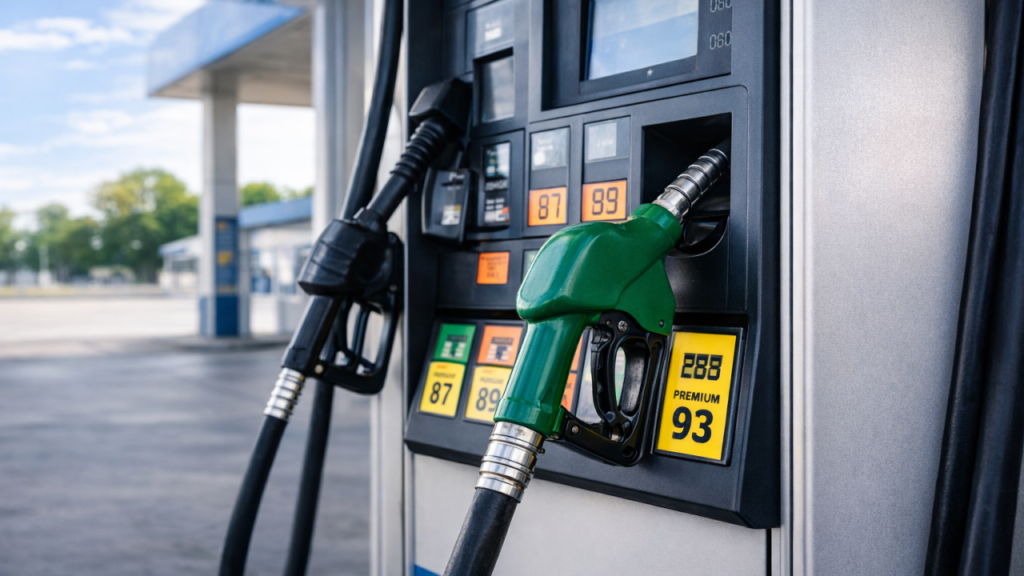
The oil industry is often viewed through the lens of what we pay at the pump, but the journey from a deep underground reservoir to your fuel tank is a complex, multi-stage process. I have personal knowledge of this process, since I have worked in the oil industry since 1979. The inflation-adjusted price of regular gasoline in 1979 is equivalent to prices you may see today at the gas pump.
Understanding this “well-to-wheel” journey is key to understanding why gas prices fluctuate. Here is a breakdown of the process and how it impacts your wallet, featuring insights from the American Petroleum Institute (API).
1. Exploration and Production (Upstream)
It all starts with finding and extracting crude oil. This is a capital-intensive stage where geology meets engineering. The availability of crude oil is the primary driver of gasoline costs.
- The Price Link: Crude oil costs typically account for about 50-60% of the price you see at the pump. When global supply is tight or geopolitical tensions rise, the price of crude spikes, causing an almost immediate ripple effect on retail prices.
2. Transportation and Storage (Midstream)
Once extracted, crude oil must be moved via pipelines, tankers, and barges to refineries.
- The Price Link: Logistical bottlenecks or increases in shipping costs (like rising maritime insurance or pipeline fees) add to the “basis” cost of the oil before it even begins transformation.
3. Refining (Downstream)
This is where the magic happens. Refineries “crack” crude oil into various products, including gasoline, diesel, and jet fuel.
- The Price Link: Refineries don’t just produce gas; they operate based on “crack spreads”—the difference between the price of crude and the price of the finished products. If refinery capacity is stretched thin (due to maintenance or weather events), gasoline prices can rise even if crude prices remain steady.
4. Distribution and Marketing
Finally, the finished gasoline is sent to terminals and then trucked to your local station.
- The Price Link: This stage includes “boutique fuel” requirements. To meet environmental standards, different regions require different fuel blends (summer vs. winter blends), which can increase production costs during seasonal transitions.
Why are prices high right now?
According to the American Petroleum Institute (API), the primary driver is the fundamental law of supply and demand. As global economies surged post-pandemic, demand for energy outpaced the world’s ability to produce and refine it.
“Gasoline prices are primarily driven by the price of crude oil and the global balance of supply and demand,” notes the API. “Policy plays a role, too. To ensure a steady supply of affordable energy, we need policies that support domestic production and infrastructure improvement.”
The Bottom Line
When you see the price change at the pump, you aren’t just paying for a gallon of liquid; you are paying for global geology, international diplomacy, complex chemistry, and a massive logistics network.
To lower costs long-term, the focus must remain on increasing supply. As the API emphasizes: “Increasing American energy production is the most effective way to provide relief for American families and strengthen our energy security.” I couldn’t agree more—investing in our domestic infrastructure is the clearest path to stability.